
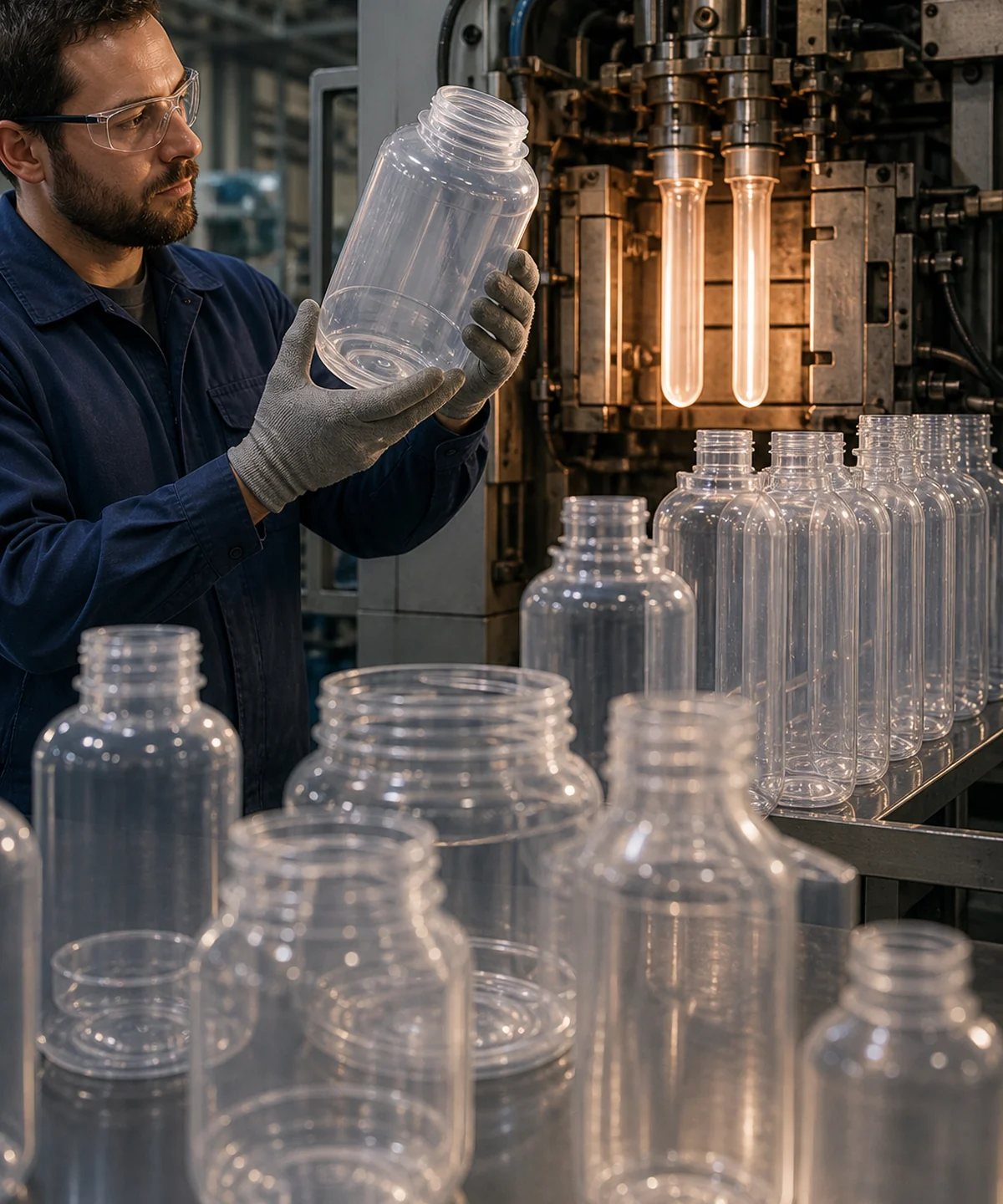
In electronic component packaging, medical consumable containers, cleanroom supplies and chemical product packaging, blow-molded parts have material requirements that differ significantly from other molding methods. Blow molding requires the material to maintain good parison stability, or melt strength, in the molten state while also retaining transparency and antistatic performance after forming. Polypropylene (PP) and polyethylene (PE), the most common base materials for blow molding, have two clear antistatic modification routes: migration-type antistatic and permanent antistatic. Their application boundaries are very different.
1. Special requirements of blow molding for transparent antistatic materials
The biggest difference between blow molding and injection molding or extrusion is that the material experiences biaxial stretching from a tubular parison to the final product during blowing. This places higher requirements on melt strength, extensional viscosity and the processing window.
For blow-molding-grade transparent antistatic materials, three core indicators determine usability.
Melt flow rate (MFR): blow molding requires a moderate melt index. For PP, an MFR of about 1.5-4.0 g/10min is usually more suitable. PE needs the right grade for the specific blow-molding type, such as extrusion blow molding or injection blow molding. If MFR is too high, the parison sags and wall thickness becomes uneven. If MFR is too low, extrusion becomes difficult and cycle time increases.
Transparency retention: after antistatic agents or conductive fillers are added, haze increases. For transparent blow-molded products such as electronic component packaging bottles and medical observation containers, a haze increase above 5% is often treated as unacceptable. High-performance transparent antistatic materials should keep haze below 8% where the application requires high clarity.
Antistatic durability: blow-molded parts are often thin-walled, typically 0.3-2.0 mm, so the effective antistatic-agent content is limited. Migration-type antistatic agents are consumed faster in thin-wall products, while permanent antistatic systems are less restricted by wall thickness.
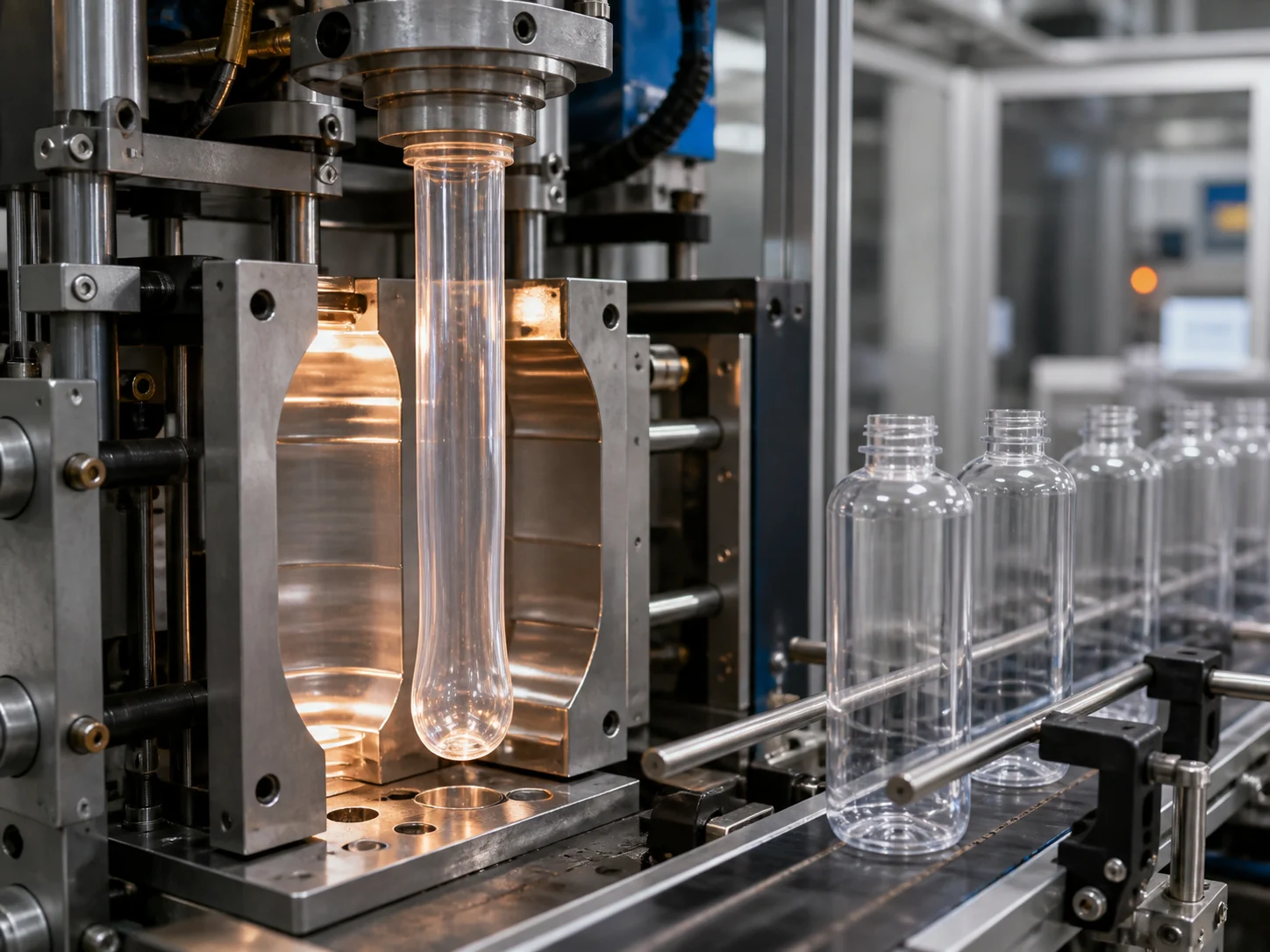
2. Core differences between the two technical routes
2.1 Migration-type antistatic agents: effective short term, but with three limits
Migration-type antistatic agents, such as ethoxylated alkyl amines and glycerol monostearate, are currently the most common antistatic modification method. Their mechanism is that small-molecule antistatic agents slowly migrate from inside the material to the surface, absorb moisture from air and form a conductive layer, reducing surface resistance.
This route has low cost, low addition level, usually 0.5-3 wt%, and relatively small impact on transparency. But it has three fundamental limitations.
First, limited effective life. Migration-type antistatic agents are consumables. Every wipe, wash or long storage period removes some antistatic agent from the surface. Internal material can continue replenishing the surface, but migration speed decreases over time. A typical result is surface resistance of 10⁹ Ω at shipment, rising to 10¹¹ Ω after six months and failing after one year.
Second, strong humidity dependence. The conductive mechanism depends on moisture adsorbed on the surface. In northern winter or air-conditioned workshops with relative humidity below 30%, insufficient surface moisture can cause resistance to rise by more than 100 times.
Third, blooming risk. Small-molecule antistatic agents may bloom to the surface, forming white powder or oily substances that can contaminate contacted electronic components or medicines.
2.2 Polymeric permanent antistatic agents: long-term stability, higher process requirements
Polymeric permanent antistatic agents, such as polyether ester amide and polyether block copolymers, are a newer technology route. The antistatic component is melt-blended with the base resin in polymer form, creating a sub-microscopic conductive network inside the substrate and providing a stable static dissipation path.
Compared with migration-type systems, permanent systems do not migrate or bloom, depend less on environmental humidity, resist wiping and washing, and keep antistatic performance stable across the product life cycle. In low humidity at 15% RH, resistance changes by less than two times; after 500 alcohol wipes, resistance drift can be controlled within about 0.15 order of magnitude in the cited validation.
The challenge is that permanent systems often require higher addition levels, about 8-20 wt%, affecting transparency and mechanical properties more strongly and narrowing the processing window. In blow molding, this means process parameters must be controlled more precisely.
3. Clearastatic transparent antistatic PP/PE solutions for blow molding
Clearastatic has accumulated years of modification experience in conductive and antistatic materials. Its product range covers conductive, static-dissipative and antistatic resistance ranges across common base resins including ABS, PP, PA6, PA66, PC, POM, PBT, PE and PVC.
DGK-PP KJD910TM: a PP-based antistatic modified material with surface resistance stable at 10⁹-10¹¹ Ω. It uses a permanent antistatic alloy route, with antistatic components that do not migrate or bloom. Its MFR is adjusted for extrusion blow molding and hollow blow molding. It is suitable for antistatic bottles, jars, containers and other hollow products.
DGK-PE KJD910TM: a PE-based blow-molding-grade antistatic material suitable for LDPE, LLDPE, HDPE and related blow-molding routes. It uses polymeric permanent antistatic modification and can control surface resistance at 10⁹-10¹¹ Ω. Some grades support transparent color matching and visible-light transmission above 88%.
Custom development: for products requiring lower surface resistance, such as 10⁶-10⁸ Ω, higher clarity such as haze below 5%, or special colors, Clearastatic can adjust formulations according to base resin, molding process and performance requirements. In formulation design, melt strength, parison sagging and wall-thickness distribution are considered together so the modified material can run stably on existing blow-molding equipment.
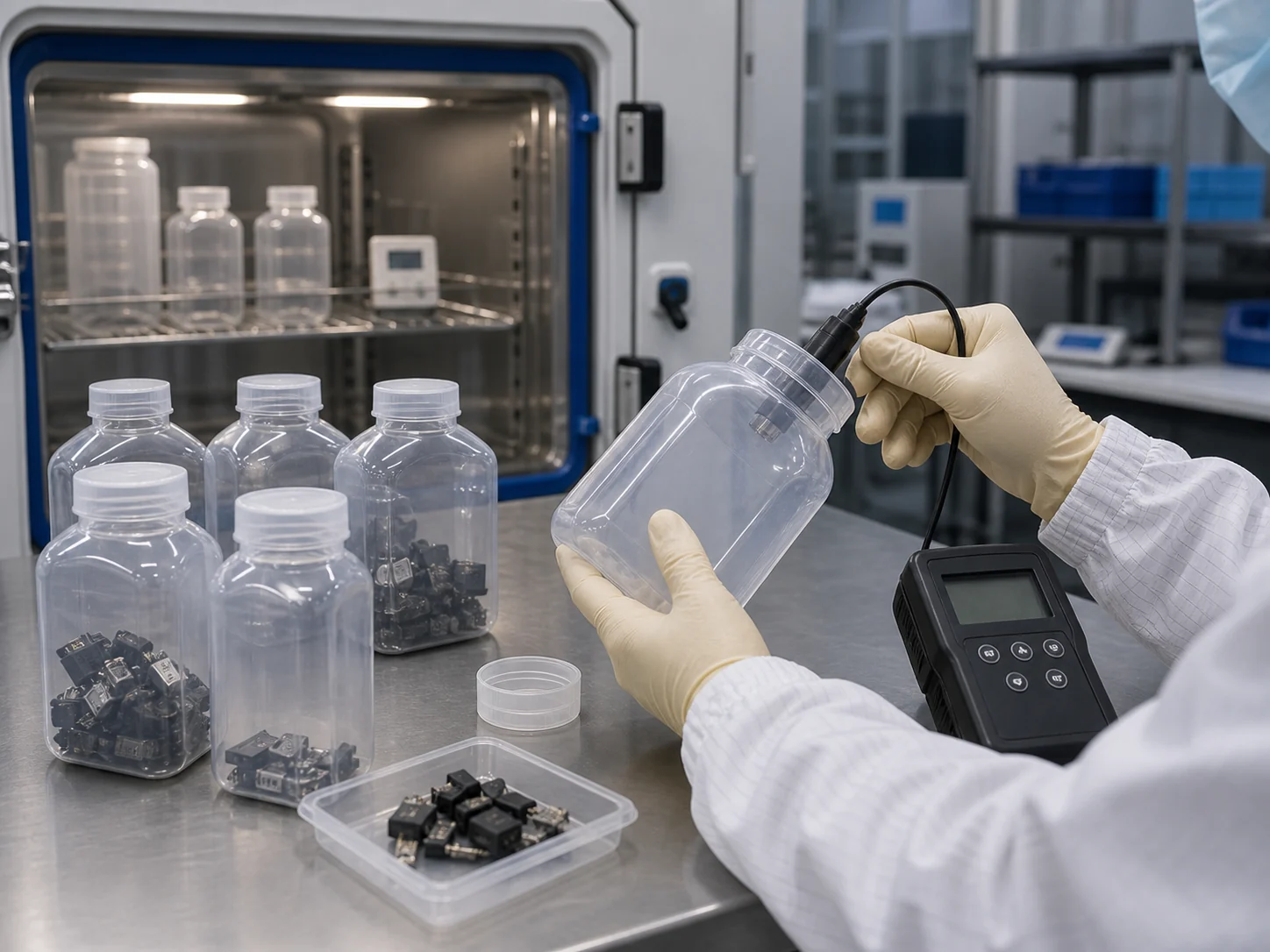
4. Three customer application cases
Case 1: antistatic packaging bottles for electronic components
An electronic component manufacturer in East China produces sensors, connectors and relays. Products require antistatic packaging before shipment to prevent ESD damage during transport and storage. The customer previously used ordinary PP blow-molded bottles plus external antistatic bags. The process was complicated and costly, and the antistatic bag failed after opening.
The first migration-type PP bottle passed initial resistance, about 5×10⁹ Ω, and transparency requirements, but after three months in warehouse storage, inner-wall surface resistance rose to 2×10¹¹ Ω, exceeding the target below 10¹⁰ Ω. After cleaning wipes, surface resistance rose above 10¹² Ω and completely lost antistatic function.
After switching to DGK-PP KJD910TM, the MFR matched the existing extrusion blow-molding equipment. Clearastatic tuned barrel temperature to 195-210°C, mold temperature to 70-80°C, and enlarged gate section to reduce shear influence on the antistatic phase. Initial surface resistance was 3.5×10⁹ Ω. After 12% RH/48 h low-humidity testing, resistance rose from 3.8×10⁹ to 8.5×10⁹, still in the same order of magnitude. After 50 alcohol wipes, resistance rose from 4.1×10⁹ to 5.6×10⁹, drifting only 0.15 order of magnitude. Light transmission at 1.5 mm wall thickness was about 86%.
| Comparison Dimension | Migration-Type PP Bottle | DGK-PP KJD910TM |
|---|---|---|
| Initial surface resistance | 5×10⁹ Ω | 3.5×10⁹ Ω |
| Resistance after 3 months storage | 2×10¹¹ Ω, over target | 4.2×10⁹ Ω, qualified |
| Resistance after wiping | 10¹² Ω, failed | 4.8×10⁹ Ω, qualified |
| Light transmission at 1.5 mm | ~87% | ~86% |
The customer has listed DGK-PP KJD910TM as the standard material for its main antistatic packaging bottle product, with 12 months of continuous supply and no static-related quality complaints.
Case 2: transparent antistatic containers for medical consumables
A medical consumables manufacturer in South China produces disposable drug-delivery containers and sample collection containers. Products are filled and sealed in a cleanroom, with strict cleanliness and antistatic requirements. Static causes powdered medicine to adhere to the container inner wall and affects dosing accuracy, which is especially important in respiratory treatments such as nebulized inhalation.
After switching from ordinary transparent PP containers to a migration-type antistatic PP container, the early static issue improved, but blooming contamination appeared on the inner wall and steam sterilization at 121°C caused resistance to rise from 10⁹ Ω to above 10¹¹ Ω.
Clearastatic recommended DGK-PE KJD910TM blow-molding-grade antistatic PE. It matched the customer's injection blow-molding equipment. Before 121°C steam sterilization, surface resistance was 2.8×10⁹ Ω. After 50 sterilization cycles, it was 3.5×10⁹ Ω, with no order-of-magnitude change. Third-party testing found inner-wall extractables below 0.01 mg/cm². Light transmission at 2 mm wall thickness was about 88%.
The material has been used in batch production. Customer feedback showed drug powder adhesion was controlled, dosing deviation fell from 10-15% to within 3%, medical-grade cleanliness testing was passed, and batch-to-batch antistatic consistency was good.
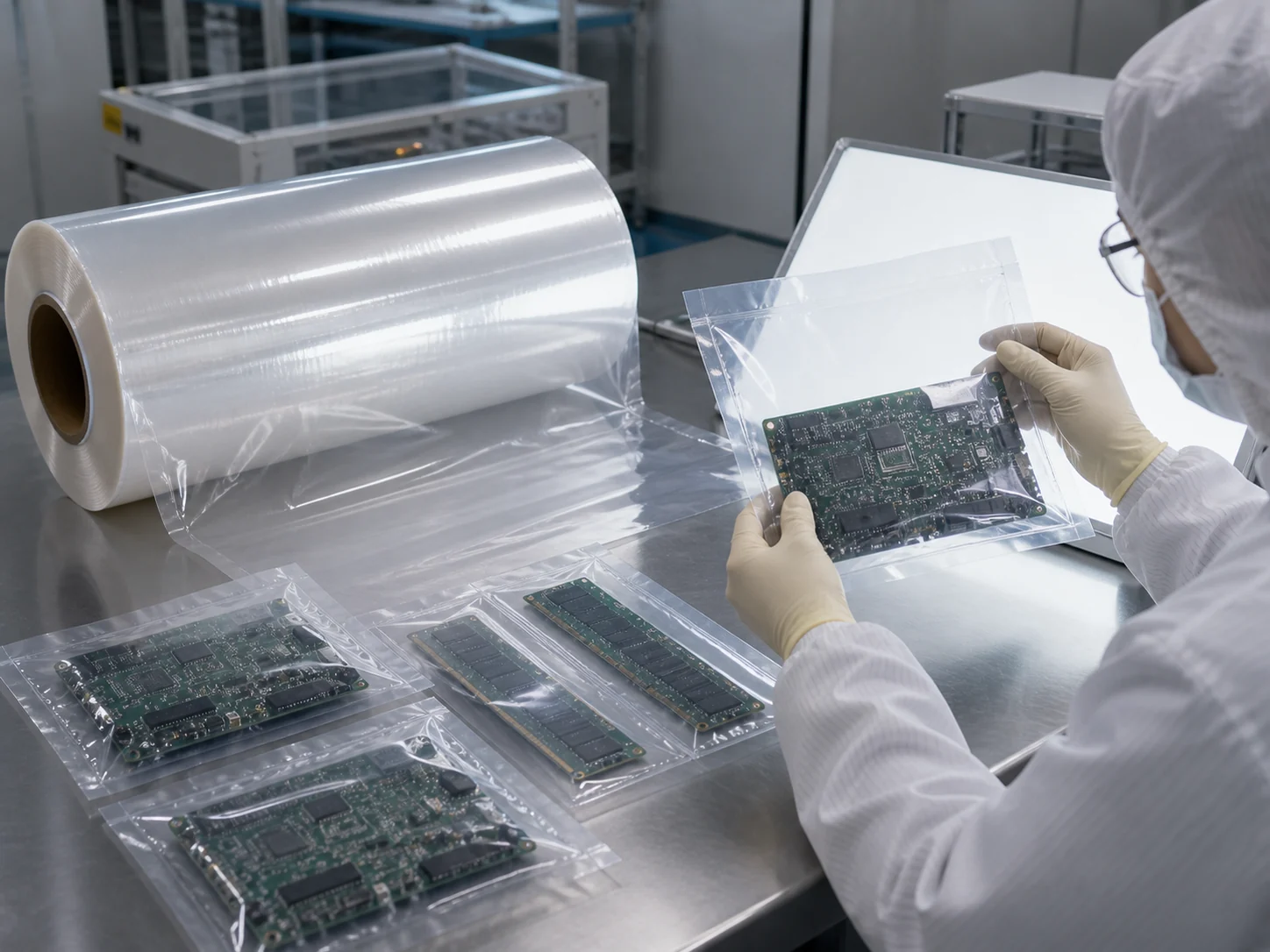
Case 3: antistatic PE film for electronic component outer packaging
An electronics packaging material company in East China supplies antistatic bags for PCB boards, memory modules and graphics cards. The customer needed a PE blown film with both transparency and permanent antistatic performance for direct contact with PCBs.
The original migration-type antistatic PE film had initial transparency of about 89% and surface resistance about 10⁹ Ω, but resistance increased to 10¹² Ω after six months of warehouse storage, and oily blooming on the film surface could contaminate PCB pads and affect SMT soldering quality.
Clearastatic recommended DGK-PE KJD910TM blow-molding-grade antistatic PE masterbatch. It was mixed with LLDPE at a 1:4 ratio and processed without changing existing equipment. Blow-molding temperature was 180-200°C, with a blow-up ratio of 2.5:1. Initial surface resistance was 6.5×10⁸ Ω. After simulated six-month storage at 40°C, it was 7.2×10⁸ Ω, still in the same order of magnitude. Light transmission at 0.05 mm thickness was about 90%, and third-party testing found no antistatic-agent blooming.
5. Selection guidance
For transparent antistatic PP/PE materials used in blow molding, the selection logic is as follows:
| Requirement Scenario | Recommended Solution | Reason |
|---|---|---|
| Electronic component antistatic bottles or jars | DGK-PP KJD910TM | Permanent antistatic, no blooming, blow-molding compatible |
| Medical consumable transparent antistatic containers | DGK-PE KJD910TM | Steam-sterilization resistance, no extractables, high light transmission |
| Antistatic PE bags or electronic packaging film | DGK-PE KJD910TM | High transparency, permanent antistatic, no blooming |
| Cleanroom containers or laboratory vessels | DGK-PP KJD910TM | Stable antistatic performance, low blooming risk, cleanable |
| Lower resistance requirement, 10⁶-10⁸ Ω | Clearastatic custom formulation | Conductive system adjusted by target requirement |
Clearastatic provides small-batch validation service and can help customers tune processes on existing blow-molding equipment. Technical data and sample information can be obtained through Clearastatic official channels.