
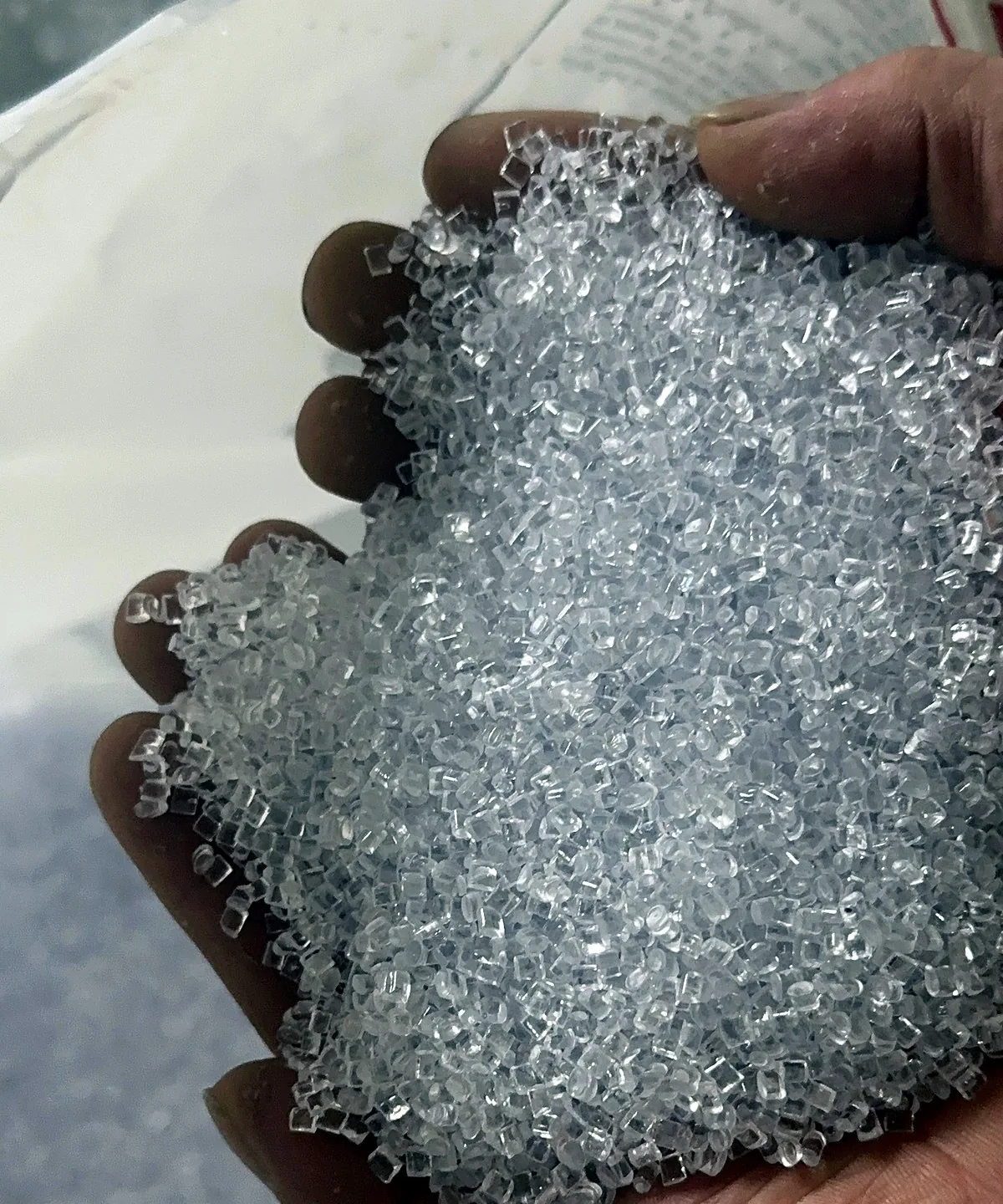
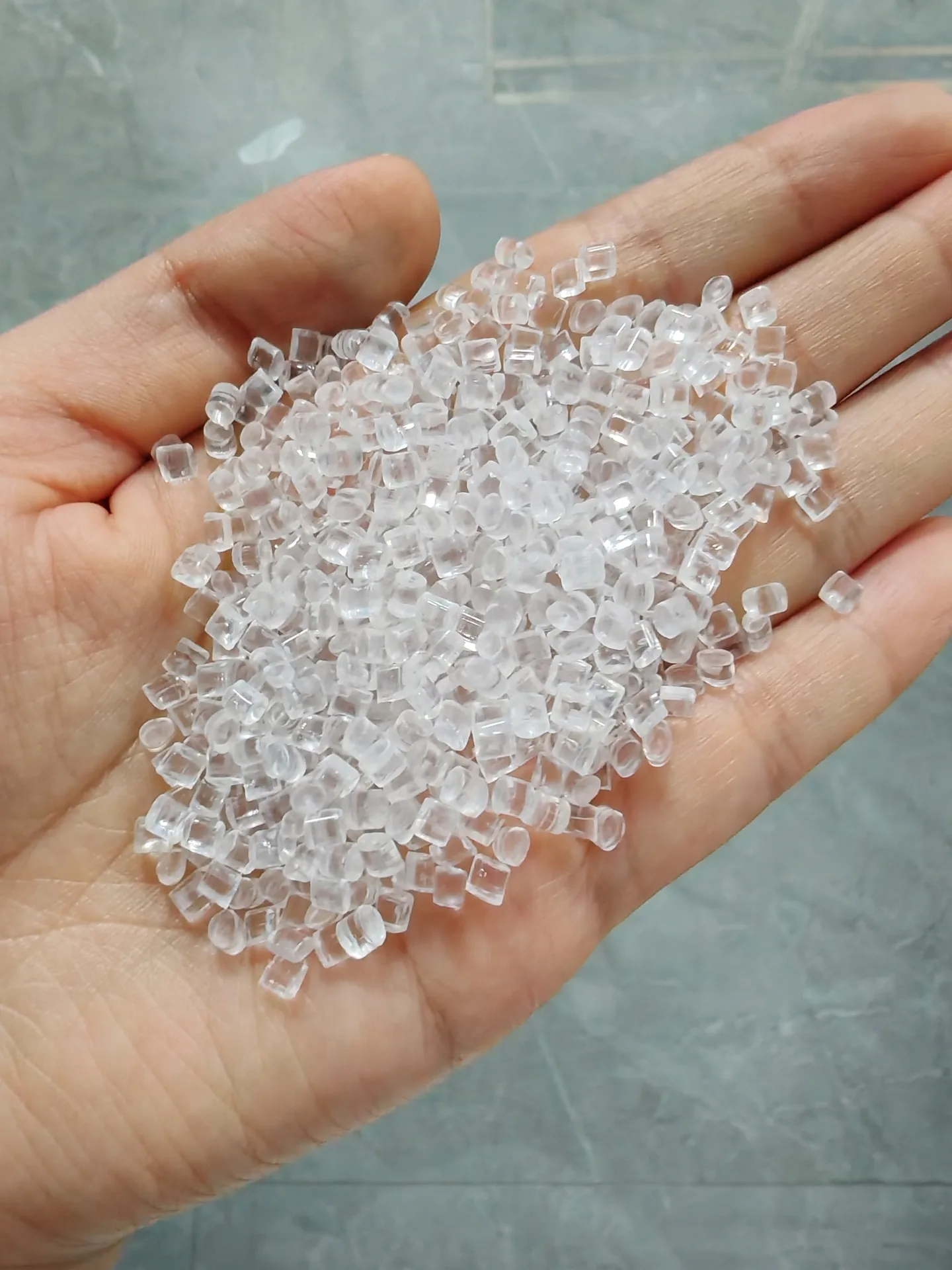
Project Overview
A material project starts by confirming clarity, antistatic level, haze, toughness and processing stability at the source. Clearastatic helps customers reduce the risks of material replacement and production introduction.
Clearastatic's patented products include transparent antistatic ABS and PMMA, with ongoing development of transparent antistatic PC, PE, PP and related materials for a wide range of transparent parts. For customers with independent production capability, Clearastatic can provide guidance on material selection, process windows, drying conditions, molding parameters and key processing points to help transfer material performance into stable production.
Performance Metrics
Performance Advantages
Material data is organized in the same order as the test report so purchasing, R&D and engineering teams can compare grade, test condition, method, value and unit.
Grade
ABS transparent antistatic materialDGK-ABS KJD890TM
| Product Name | ABS composite |
|---|---|
| Grade | DGK-ABS KJD890TM |
| Material Properties | Ultra-high clarity, permanent antistatic |
| Color | High clarity |
| Sample State | Pellets |
| Processing Method | Injection molding |
| Property | Test Condition | Test Method | Test Value | Unit |
|---|---|---|---|---|
| Mechanical Properties | ||||
| Flexural Strength | 2mm/min | GB/T9341-2008 | 57 | MPa |
| Flexural Modulus | 2mm/min | GB/T9341-2008 | 1612 | MPa |
| Tensile Strength | 50mm/min | GB/T1040-2006 | 39 | MPa |
| Yield Strength | 50mm/min | GB/T1040-2006 | 40.3 | MPa |
| Elongation at Break | 50mm/min | GB/T1040-2006 | 35.8 | % |
| Charpy Notched Impact Strength | 23℃ | GB/T1043.1-2008 | 10.5 | KJ/m2 |
| Charpy Unnotched Impact Strength | 23℃ | GB/T1043.1-2008 | 86 | KJ/m2 |
| Izod Notched Impact Strength | 23℃ | GB/T1843-2000 | 12.3 | KJ/m2 |
| Other Properties | ||||
| Melt Flow Rate | 220℃/10kg | GB/T3682-2000 | 48 | g/10min |
| Density | Not specified | GB/T1033-1986 | 1.118 | g/cm3 |
| Heat Deflection Temperature | 0.45MPa | GB/T1633-2000 | 85 | ℃ |
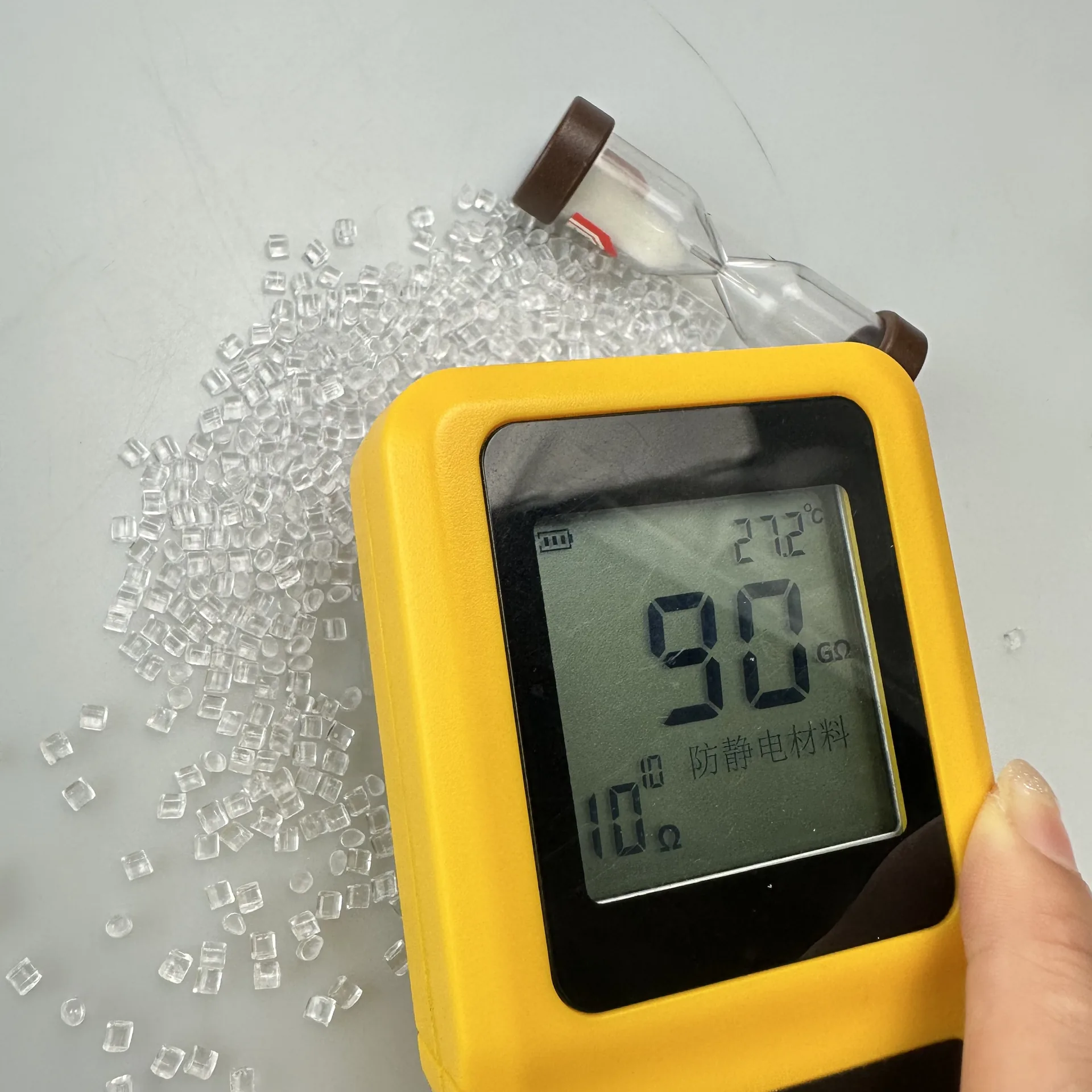
| Surface Resistivity | Not specified | GB/T1401-2002 | 10^8-10^10 | Ω/□ |
| Drying temperature | 85 C |
|---|---|
| Drying time | 4-5 hours |
| Injection temperature | 195-210 C |
| Mold temperature | 70 C |
Conclusion: The above values and molding process are typical laboratory values for reference only. They may be adjusted according to different machines, molds and product requirements, and are not a guarantee for quality specifications or any other use.
Grade
PMMA transparent antistatic materialDGK-PMMA KJD890TM
| Product Name | PMMA composite |
|---|---|
| Grade | DGK-PMMA KJD890TM |
| Material Properties | High clarity, permanent antistatic |
| Color | High clarity |
| Sample State | Pellets |
| Processing Method | Injection molding |
| Property | Test Condition | Test Method | Test Value | Unit |
|---|---|---|---|---|
| Mechanical Properties | ||||
| Flexural Strength | 2mm/min | GB/T9341-2008 | 75.3 | MPa |
| Flexural Modulus | 2mm/min | GB/T9341-2008 | 1891 | MPa |
| Tensile Strength | 50mm/min | GB/T1040-2006 | 59.4 | MPa |
| Elongation at Break | 50mm/min | GB/T1040-2006 | 22 | % |
| Charpy Notched Impact Strength | 23℃ | GB/T1843-2000 | 4.0 | KJ/m2 |
| Charpy Unnotched Impact Strength | 23℃ | GB/T1843-2000 | 21.8 | KJ/m2 |
| Izod Notched Impact Strength | 23℃ | GB/T1843-2000 | 5.3 | KJ/m2 |
| Other Properties | ||||
| Melt Flow Rate | 230℃/3.8kg | GB/T3682-2000 | 9.3 | g/10min |
| Density | Not specified | GB/T1033-1986 | 1.154 | g/cm3 |
| Heat Deflection Temperature | 0.45MPa | GB/T1634-2000 | 95 | ℃ |
| Surface Resistivity | Not specified | GB/T1401-2002 | 10^9-10^11 | Ω/□ |
| Drying temperature | 90 C |
|---|---|
| Drying time | 4-5 hours |
| Injection temperature | 195-215 C |
| Mold temperature | 90 C |
Conclusion: The above values and molding process are typical laboratory values for reference only. They may be adjusted according to different machines, molds and product requirements, and are not a guarantee for quality specifications or any other use.
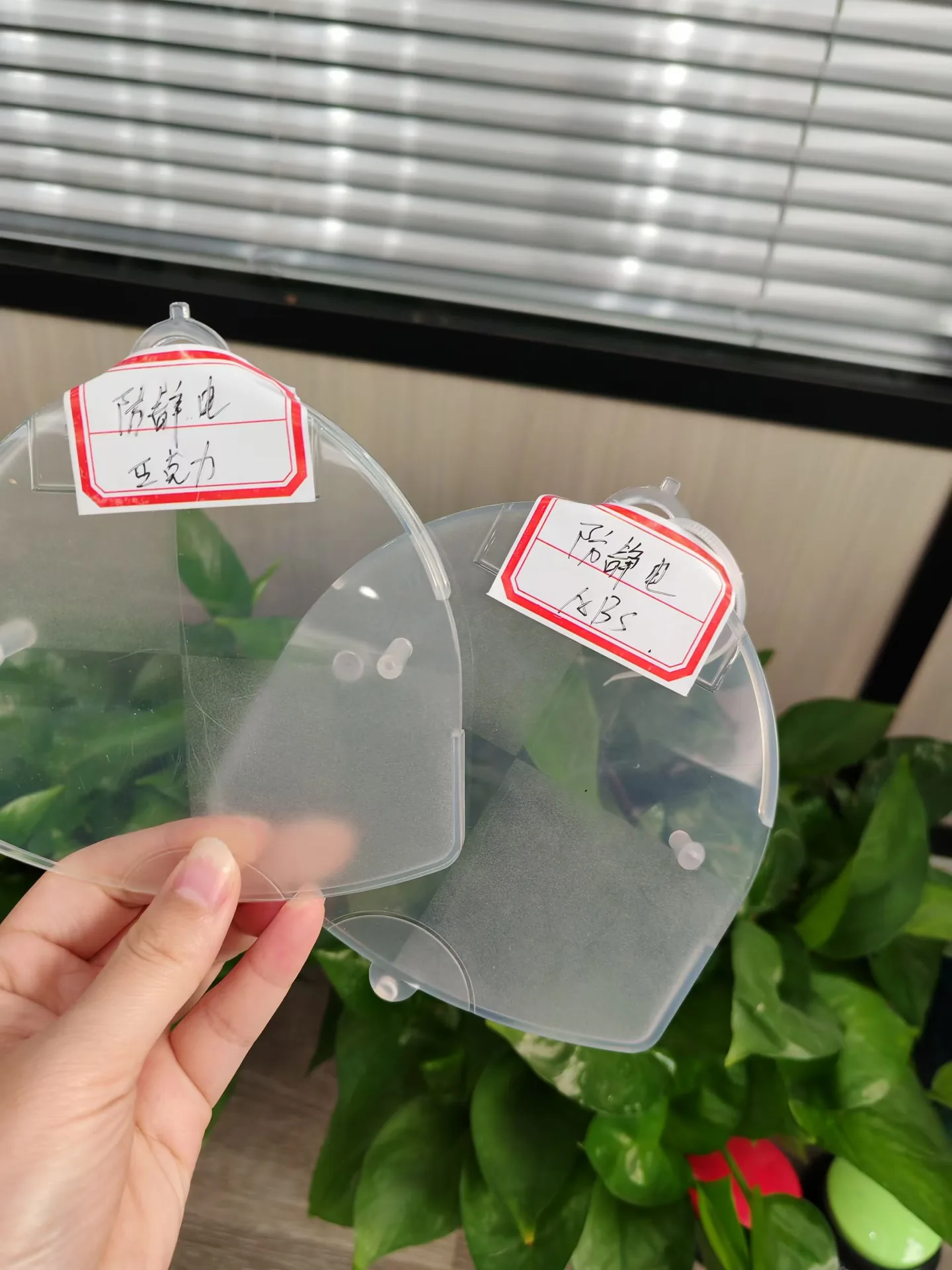
Customization is available for color, clarity, antistatic level, base resin and production process.
Measurable Metrics
- Clarity / haze
- Surface Resistance
- Notched Impact
- Dimensional Assembly
Testing and Validation Path
- Sample testing
- Trial-batch retesting
- Molded-part evaluation
- Batch inspection
Engineering Deliverables
- Material Recommendation
- Formulation Limits
- Tooling DFM points
- Molding Window Records
Collaborative Engineering Team
- Materials Engineer
- Tooling Engineer
- Injection Molding Engineer
- Quality Validation
Quotation Plan
Transparent Antistatic Material Quotation Plan
Material quotation depends on base resin, target resistance level, clarity, color and molding route. ABS and PMMA can reference the common grades below; other transparent antistatic materials such as PC, PP and PE need project-specific evaluation.
ABS transparent antistatic material
ABS 10th-power grade
DGK-ABS KJD890TM is suitable for transparent antistatic ABS material requirements targeting a 10th-power resistance grade.
CNY 45/kgABS transparent antistatic material
ABS 9th-power grade
DGK-ABS KJD890TM is suitable for transparent antistatic ABS material requirements targeting a 9th-power resistance grade.
CNY 46/kgPMMA transparent antistatic material
PMMA 10th-power grade
DGK-PMMA KJD890TM is suitable for transparent antistatic PMMA material requirements targeting a 10th-power resistance grade.
CNY 65/kgPMMA transparent antistatic material
PMMA 9th-power grade
DGK-PMMA KJD890TM is suitable for transparent antistatic PMMA material requirements targeting a 9th-power resistance grade.
CNY 67/kgOther transparent antistatic materials
Other materials such as PC, PP and PE
PC, PP, PE and other transparent or translucent base resins need separate evaluation by clarity, antistatic level, temperature resistance, toughness and molding route.
Project-specific evaluationSample validation
Material samples
ABS and PMMA samples can be tested first; samples for other materials are confirmed by base resin, color, stock availability and project requirements.
Free samples or project-specific confirmationFAQ
FAQ
Common questions about transparent antistatic material selection, sample testing and trial-batch validation.
Are transparent antistatic, anti-static clear plastic, static dissipative clear plastic and ESD-safe transparent plastic the same?
They are related search terms, but the engineering meaning should be confirmed by data. For most projects, the key is whether the transparent material reaches the required surface-resistance range, keeps enough clarity and haze control, and remains stable after molding, wiping or storage.
Clearastatic keeps transparent antistatic material as the main wording, while also describing suitable projects as anti-static clear plastic, static dissipative clear plastic or ESD-safe transparent plastic when the application context calls for it.
What products mainly use transparent antistatic materials?
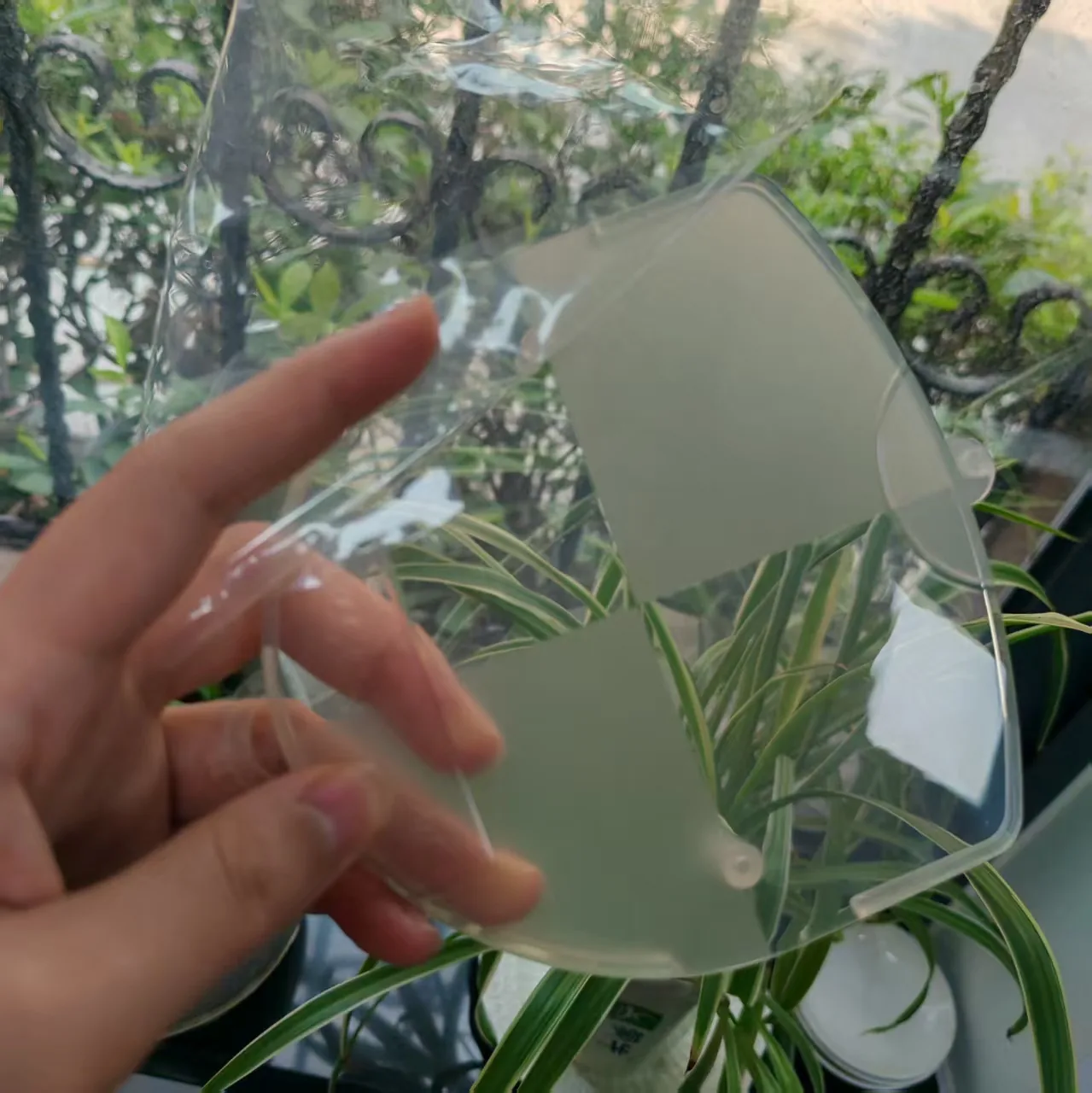
They are mainly used in products that require clear visibility while also controlling static, dust attraction or powder adhesion, such as chip trays, IC handling boxes, equipment observation windows, machine-vision protective covers, automotive instrument covers, medical equipment transparent parts, laboratory supplies and clear packaging containers.
Different applications have different requirements for antistatic level, transparency, impact resistance and chemical resistance, so the material solution will also differ.
Which transparent antistatic materials are currently mature?
The more mature intrinsic transparent antistatic solutions are mainly:
- Transparent antistatic ABS: surface resistivity 10⁸-10¹⁰ Ω/□
- Transparent antistatic PMMA: surface resistivity 10⁹-10¹¹ Ω/□
ABS is more suitable for impact-resistant and structural parts, while PMMA is more suitable for high transparency and scratch resistance.
If the project specifies PC, PP or PE, the solution needs to be evaluated separately according to transparency, antistatic level, processing method and use environment.
Why can transparent antistatic materials not be judged only by resistance power?
Because lower resistance does not automatically mean the material is more suitable.
Real projects also need to consider transparency, haze, wall thickness, impact performance, scratch resistance, water resistance, chemical resistance and molding process.
For example, ABS has better impact resistance but may fog after long water exposure. PMMA has better transparency and scratch resistance but weaker impact resistance.
Can PC, PP and PE be made transparent antistatic?
They can be evaluated, but they should not be understood directly as the same mature solution as ABS or PMMA.
If the project must use PC, PP or PE, first confirm the target resistance, transparency, product thickness, processing method and use environment.
Some projects may use material modification, while others may require surface treatment or another technical route, so validation must be done for the specific product.
What practical problems can transparent antistatic materials solve?
They mainly solve common issues of ordinary transparent plastics:
- Static dust attraction
- Powder or fine-particle adhesion to walls
- Electrostatic risk for precision electronic components
- Dust accumulation on clear windows
- Difficulty combining visibility and antistatic function in one product
The value of transparent antistatic materials is therefore not just that a resistance value can be measured, but that they deliver visibility + static control + product function together.
Why should the final validation use actual products instead of only material samples?
After injection molding, extrusion or other processing, final performance can still be affected by wall thickness, temperature, shear, flow distance, mold structure and processing parameters.
For formal projects, the final confirmation should include surface resistivity, transparency, haze, appearance, dimensions and stability under the real use environment on actual molded parts.
Material samples are for preliminary selection; actual parts are the final basis for judgment.